Los Angeles & Orange County · Fibroid care
Uterine Fibroid Treatment Options
A clear starting point for comparing medication, UFE, myomectomy and other treatments—based on your symptoms, imaging and pregnancy goals.
Van Nuys · Tarzana · Fountain Valley
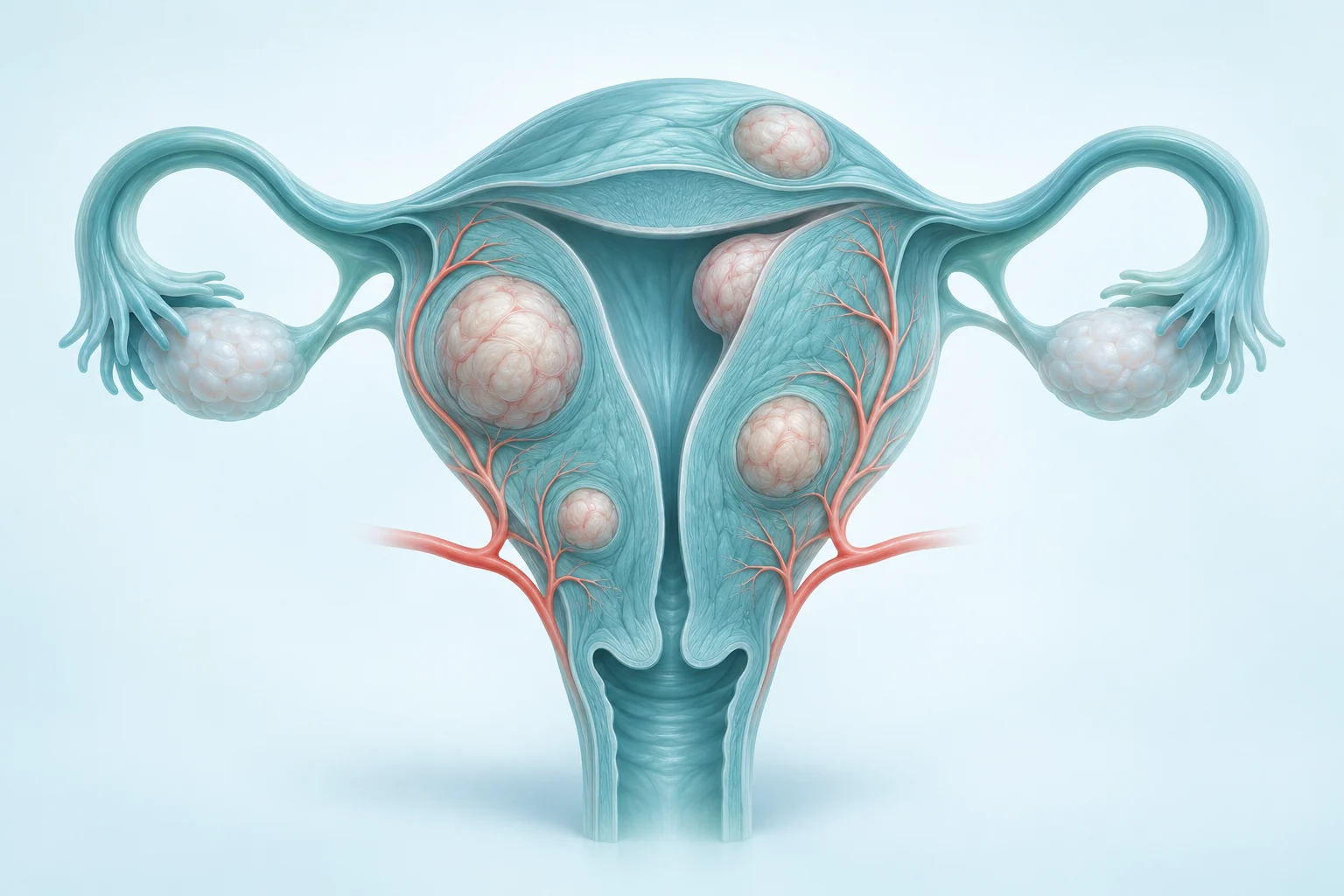
What are the treatment options for uterine fibroids? Options can include observation, medication, fibroid-directed procedures, uterine fibroid embolization (UFE), myomectomy and hysterectomy. Treatment is not always needed. The choice depends on symptoms, fibroid location, bleeding and anemia, pregnancy goals and the findings of a gynecologic evaluation.
Heavy menstrual bleeding, pelvic pressure, urinary frequency and discomfort can occur with fibroids, but these symptoms can have other causes. Ultrasound or MRI may help define the number, size and position of fibroids. SoCal Interventional evaluates patients considering UFE in Los Angeles and Orange County; treatment selection may require coordination with a gynecologist. SIR: fibroid symptoms and evaluation.
Start with your symptoms and goals
An imaging report may mention more than one condition. Compare fibroids and adenomyosis, including diagnosis and treatment questions.
Tell your clinician which symptom most affects your life and whether future pregnancy matters to you. Heavy bleeding may warrant evaluation for anemia. Abnormal bleeding should not automatically be attributed to a fibroid found on imaging; your gynecologist will determine whether additional investigation is needed.
Bring previous imaging, a medication list, prior treatment records and a description of the bleeding or pressure symptoms. A procedure that is reasonable for one fibroid pattern may not fit another.
Compare the main approaches
| Approach | What it may offer | What to discuss |
|---|---|---|
| Observation | Monitoring when symptoms are absent or manageable. | What changes should prompt reassessment and whether follow-up testing is needed. |
| Medication | Control of bleeding or other symptoms; some therapies can temporarily reduce fibroid size. | Benefits, side effects, duration, contraindications and what happens after medication stops. |
| UFE / UAE | An image-guided arterial procedure that treats fibroids by reducing their blood supply. | Candidacy, recovery, ovarian and reproductive considerations, and the possibility of later treatment. |
| Myomectomy | Removal of fibroids while keeping the uterus. | Which surgical route fits the anatomy, bleeding and scar risks, recurrence and pregnancy plans. |
| Other fibroid-directed procedures | Selected patients may be evaluated for techniques such as radiofrequency ablation or focused ultrasound. | Availability, eligibility, evidence, reproductive implications and expected symptom control. |
| Hysterectomy | Removal of the uterus; definitive treatment for uterine fibroids. | Surgical risks, recovery, alternatives and the fact that carrying a pregnancy is no longer possible. |
These options are described for comparison; our practice's fibroid procedure is UFE. See ACOG's treatment overview and NHS: fibroid treatments for additional patient information.
Where UFE fits
UFE may be considered for symptomatic fibroids after an appropriate evaluation. It treats the blood supply through a small arterial access site instead of removing the uterus. It is a procedure with meaningful risks, rather than a risk-free alternative to surgery.
Evaluation considers imaging, the source of symptoms, infection, pregnancy, kidney function, contrast-related risks and other health factors. Candidacy is not established by fibroid size alone. Your clinician should explain recovery, follow-up and what happens if symptoms do not improve. ACR/RSNA UFE guide.
Preserving the uterus and planning pregnancy
These are related but separate goals. Myomectomy and UFE both retain the uterus, yet their implications for conception and pregnancy differ. Evidence does not establish equivalent reproductive outcomes. Tell your gynecologist and interventional radiologist if you want a future pregnancy or are unsure, so that fertility counseling is part of the decision. FEMME reproductive-outcomes analysis.
Questions that make an evaluation more useful
- Are fibroids the likely cause of my symptoms?
- What testing or anemia treatment should happen first?
- Which options fit the location and number of my fibroids?
- How would each option affect my pregnancy goals and recovery time?
- What are the risks, costs and chances of needing another treatment?
Common questions about fibroid treatment
Do all fibroids need treatment?
No. Fibroids without significant symptoms may be monitored. Symptoms, complications, reproductive goals and clinical findings determine whether treatment should be considered.
Can fibroids be treated without a hysterectomy?
Yes. Depending on the situation, medication, myomectomy, UFE or another fibroid-directed treatment may be considered. The appropriate choice requires an individual evaluation.
Is UFE the same as UAE?
In fibroid treatment, UFE means uterine fibroid embolization and UAE means uterine artery embolization. The terms are commonly used for the same embolization approach to symptomatic fibroids.
Which specialist should I see?
A gynecologist evaluates fibroid symptoms and surgical or medical options. An interventional radiologist evaluates embolization. When choices overlap, input from both can help clarify the tradeoffs.
Severe bleeding with faintness, chest pain or shortness of breath needs urgent medical attention. Do not wait for an online appointment response.