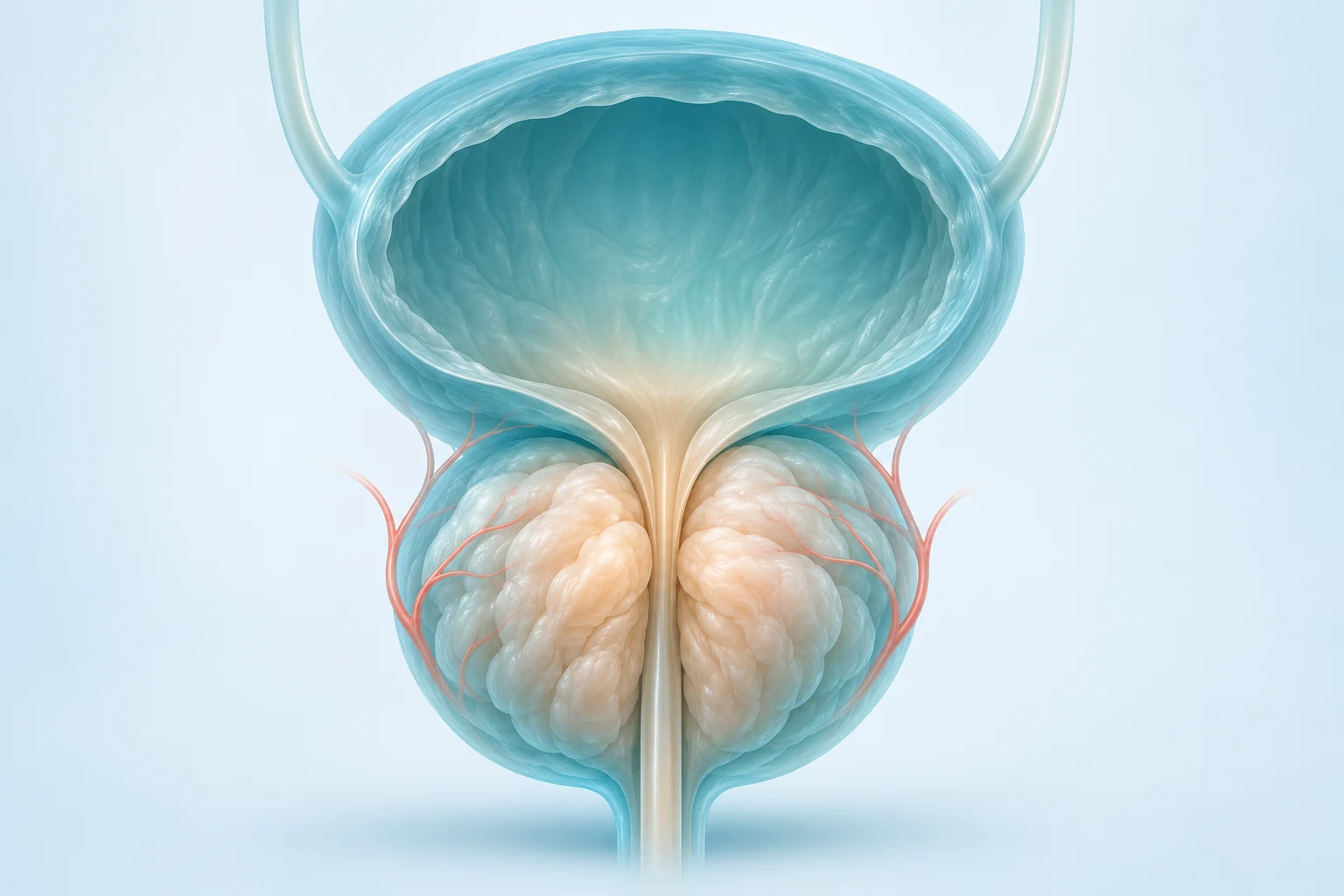
01Observation & medication
Mild symptoms without complications may be monitored. Fluid timing, caffeine or alcohol reduction, constipation treatment, and medication review may help selected patients.
Medication options can include alpha blockers, 5-alpha-reductase inhibitors, tadalafil, and selected combinations. Benefits, time to response, blood-pressure effects, sexual effects, and interactions differ. Medication can help many patients but may be inadequate, poorly tolerated, or inconsistent with individual goals.
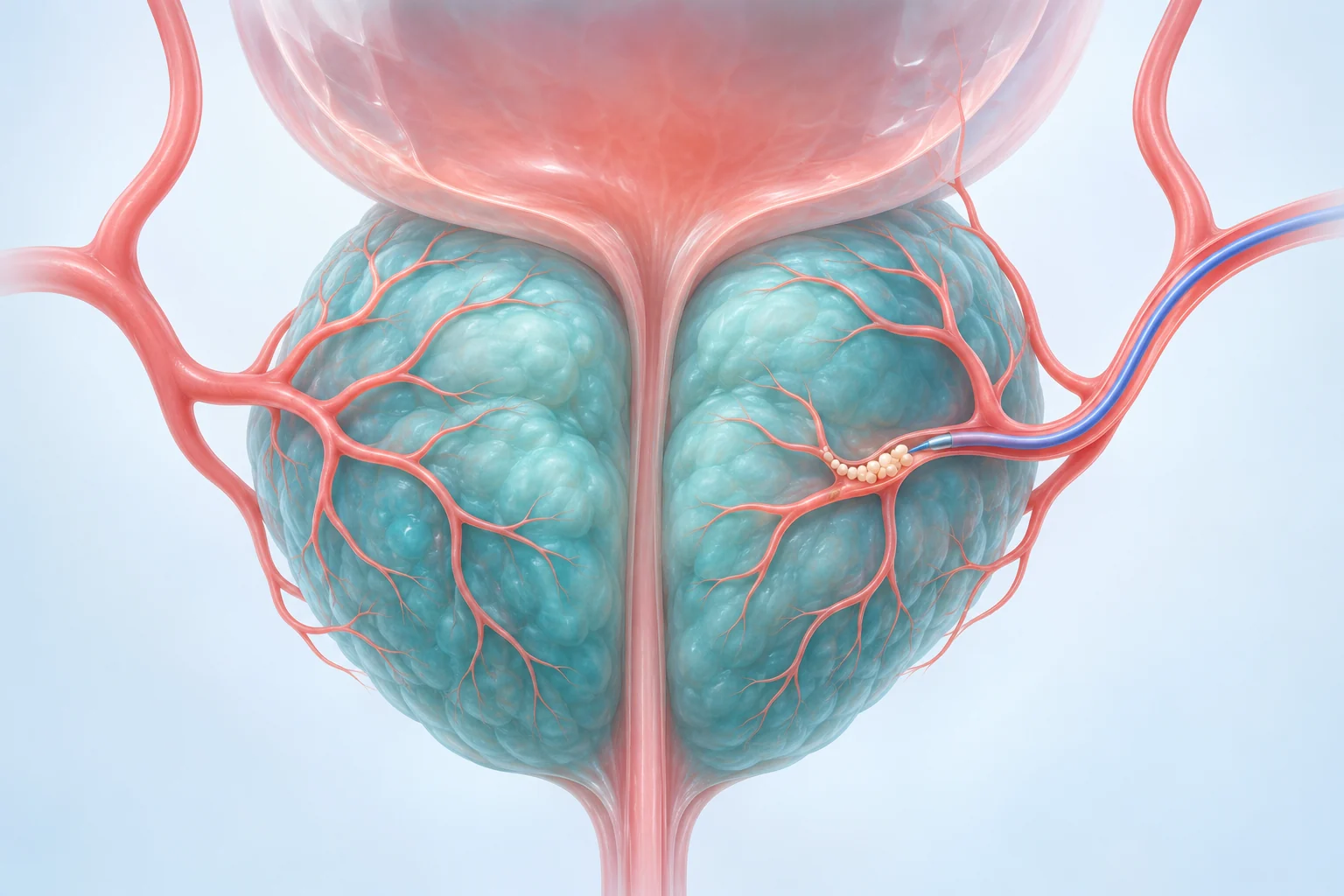
02Prostate artery embolization
PAE uses a small arterial catheter to reduce blood flow to selected prostate tissue. Symptoms may improve as the tissue shrinks over time.
It avoids transurethral tissue removal, but response varies and additional treatment may be needed.
Explore the PAE treatment guide
03Urologic procedures
Options may include TURP, HoLEP or other laser procedures, aquablation, water-vapor therapy, prostatic urethral lift, and additional techniques. Eligibility depends on prostate size and shape, obstruction severity, retention, bladder function, bleeding risk, available expertise, and patient goals.
Tissue-removing procedures often provide stronger or faster improvement in urinary flow than PAE. They can also involve anesthesia, catheterization, bleeding, incontinence, urethral complications, or ejaculatory changes. Risks vary by procedure and patient. Read the focused PAE versus TURP comparison.