Uterine health · Patient guide
Heavy Periods and Fibroids
When bleeding disrupts your day, the first step is finding the cause. Learn when to seek care and what to ask about anemia, fibroids and your treatment options.
SoCal Interventional · Los Angeles & Orange County
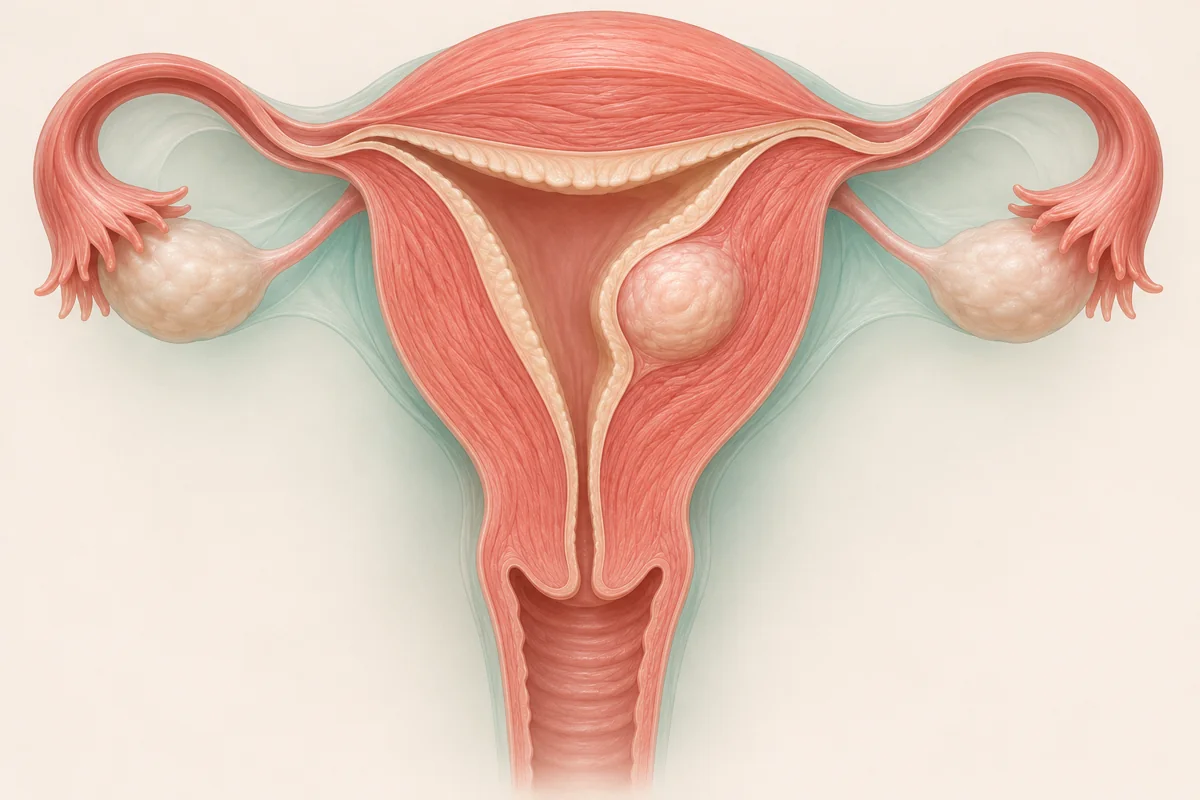
Can fibroids cause heavy periods? Yes. Fibroids that press into the uterine cavity can contribute to heavy or prolonged bleeding. If your periods interrupt sleep, work or ordinary activities, arrange an evaluation. A clinician can check for anemia and other causes before you choose a treatment.
How can I tell if my period is unusually heavy?
Think about what you have to change in your day. You may need two products together, get up at night to change protection, bleed through clothes or plan commutes around restroom access. Bleeding for more than a week or repeatedly passing large clots is also worth discussing. You can ask for help even if you have never measured the amount of blood you lose. CDC signs of heavy menstrual bleeding.
Tell your clinician whether bleeding happens during an expected period, between periods or after sex. A new pattern after years of predictable cycles deserves attention. After menopause, even light spotting warrants assessment. A fibroid found years ago may be only one piece of the explanation.
Why fibroid location matters
Fibroids are growths arising from uterine muscle. A fibroid close to the uterine lining, especially one extending into the cavity, can be associated with heavy menstrual flow. One that grows toward the outside of the uterus may cause pressure or urinary symptoms. Size, location and the rest of the evaluation all matter. A scan showing a fibroid cannot establish on its own that the fibroid is causing the bleeding. ACOG patient information on fibroids.
Other possibilities include polyps, adenomyosis, changes in ovulation, a bleeding disorder, medications or a pregnancy-related problem. Sometimes the uterine lining itself needs evaluation. If you have always had very heavy periods, bruise easily or have relatives with a bleeding disorder, mention that history. Tell the clinician about blood thinners before changing how you take any medicine. How fibroids and adenomyosis differ.
What will a clinician check for?
A primary care clinician or gynecologist can start with your bleeding pattern, pregnancy possibility, medicines and symptoms such as fatigue or breathlessness. They may recommend a pregnancy test when relevant. A complete blood count can detect anemia and show how low the hemoglobin is. Depending on the history and results, the clinician may also check iron stores. Ask how you will receive your results and when follow-up is needed. NICE recommendations on heavy menstrual bleeding.
Pelvic ultrasound can map fibroids and their relationship to the uterine cavity. If the pattern suggests a polyp, a fibroid inside the cavity or a lining abnormality, your gynecologist may discuss hysteroscopy, a camera examination, and whether tissue sampling is appropriate. MRI can help clarify selected findings or plan a procedure. Your care team can advise which test will change the decision.
What are the treatment choices if fibroids are contributing?
The first question is what you want treatment to accomplish. That may be getting through a workday without changing clothes, rebuilding iron stores, relieving pelvic pressure or preserving the chance of pregnancy. Treating anemia and treating the source of bleeding may both be necessary.
| Option | What to discuss |
|---|---|
| Medication or a hormonal intrauterine system | Ask which options can reduce flow, what side effects to expect and whether the cavity shape or your health history affects the choice. |
| Myomectomy | A gynecologist can discuss removal of selected fibroids. The route depends in part on location. Pregnancy plans can influence that discussion. |
| Uterine fibroid embolization (UFE) | An interventional radiologist evaluates whether reducing the fibroids’ blood supply might improve bleeding or pressure. Improvement takes time, and future treatment may be needed. |
| Hysterectomy | Removing the uterus ends uterine bleeding and the ability to carry a pregnancy. Ask about surgical approach, alternatives and recovery. |
If future pregnancy is important to you, bring it up before choosing a procedure. Preserving the uterus does not establish an individual chance of pregnancy. A gynecologist and an interventional radiologist can discuss fertility uncertainty, procedure risks and alternatives. Compare fibroid treatment options · UFE and myomectomy.
What to bring to a bleeding evaluation

If you are well enough to wait for a scheduled visit, jot down a few details beforehand. Seek urgent care when needed, even if you have yet to start a diary.
- First and last day of bleeding, heaviest days, overnight changes and any spotting between periods.
- How often you fully soak a product or empty a cup, and whether you pass large clots. An approximate account is useful.
- Fatigue, dizziness, pain, pelvic pressure or a change in daily activities.
- Your medicine list, any prior blood counts or imaging already available, and treatments you have tried.
- Whether pregnancy is possible, whether you hope to become pregnant and which symptoms you most want to improve.
Ask your gynecologist what else might explain the bleeding and whether anemia needs treatment now. If the findings point to fibroids, ask which treatments fit their location and your goals. For an embolization opinion, bring the report and images if you already have them. How a UFE candidacy evaluation works.
Common questions
Can a small fibroid cause heavy periods?
A small fibroid that distorts the uterine cavity can contribute to heavy bleeding. The clinician considers location, bleeding pattern and other possible causes together.
Does heavy bleeding always mean I have fibroids?
No. Hormonal changes, polyps, adenomyosis, bleeding disorders, medications and pregnancy-related conditions can also cause bleeding. The evaluation depends on the circumstances.
Should I have my iron checked?
Ask about a complete blood count to look for anemia. Your clinician can decide whether iron studies are useful and whether you need treatment for iron deficiency as well as the bleeding.
Do I need an MRI before seeing a gynecologist?
You can arrange an evaluation without obtaining an MRI first. Bring imaging you already have. A clinician can recommend ultrasound, hysteroscopy or other tests according to the bleeding pattern and examination.
Can UFE help with fibroid-related heavy bleeding?
It can help selected patients when fibroids are a likely cause. A gynecologic evaluation and a discussion with an interventional radiologist can clarify options, expected timing, risks and reproductive goals.
Plan your next conversation
For a scheduled fibroid consultation, Nathanael Sabbah, MD sees patients in Van Nuys, Tarzana and Fountain Valley. Bring your gynecologic and imaging records if available.