Urinary symptoms · Diagnosis before treatment
Nighttime Urination: Is It BPH?
Understand the possible causes, what to record before your appointment, and when prostate treatment deserves consideration.
SoCal Interventional · Los Angeles & Orange County
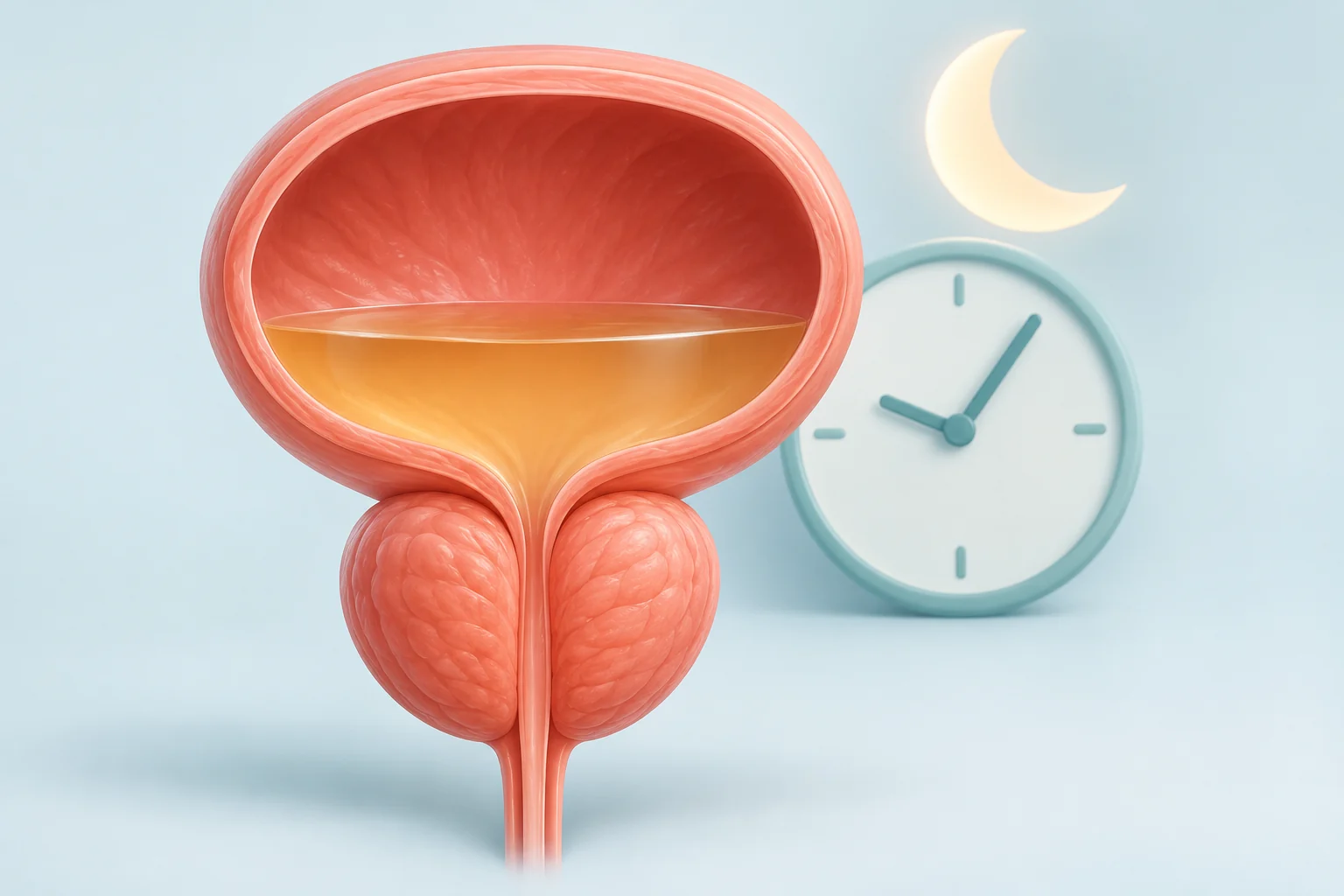
Does waking up to urinate mean you have an enlarged prostate? Not necessarily. Nighttime urination, called nocturia, can involve how much urine you produce, how your bladder stores or empties it, and what interrupts your sleep. BPH is one possible contributor. Finding the cause matters before choosing a prostate treatment.
Why you may be urinating frequently at night
Nocturia means waking from sleep to pass urine. It can occur in people with or without a prostate, and several factors can overlap. The number of trips alone cannot identify the cause. A useful distinction is whether you wake because your bladder feels full or wake for another reason and then decide to use the bathroom. EAU patient overview.
| Pattern to discuss | Possible explanation | Useful detail to bring |
|---|---|---|
| Nighttime trips plus a weak stream | Prostate-related obstruction or another emptying problem may need assessment. | Hesitancy, straining, interrupted flow or a feeling of incomplete emptying. |
| Frequent trips with small amounts | Bladder urgency or reduced storage capacity may contribute. | Whether urgency also occurs during the day, with leakage or discomfort. |
| Large amounts overnight | Increased nighttime urine production may be part of the problem. | Evening drinks, medicines, daytime swelling and measured urine volumes. |
| Waking with snoring or poor sleep | A sleep disorder may coexist with urinary symptoms. | Snoring, witnessed breathing pauses or daytime sleepiness. |
These patterns are conversation starters, not a way to diagnose yourself. The Urology Care Foundation describes urine production, bladder function and medical conditions as different parts of the evaluation.
Evening fluid intake, caffeine, alcohol and some medicines can contribute. Diabetes, kidney or heart conditions and obstructive sleep apnea can also be relevant. Tell your clinician about thirst, swelling, sleep symptoms and medication timing rather than assuming every nighttime trip comes from the prostate. MedlinePlus: urinating more at night.
A bladder diary makes the appointment more useful
A short record of ordinary days can help distinguish frequent small voids from higher urine production. The EAU recommends recording drinks, bathroom trips, urine amounts when practical, and relevant symptoms over several days. Use the format your clinician requests. Do not deliberately dehydrate yourself to make the diary look better. EAU bladder-diary guidance.
| Record | What to write down |
|---|---|
| Sleep | Bedtime, waking time and whether you woke because of an urge or another disturbance. |
| Drinks | Time, approximate amount and type of drink. |
| Bathroom visits | Time and measured volume if your clinician asks you to measure it. |
| Symptoms | Urgency, leakage, pain or difficulty getting started. |
| Context | Medication timing and unusual changes in routine. |
Bring the record as it is, including nights that were better or worse. Ask: “Do these entries suggest a storage problem, an emptying problem, increased urine production, or more than one issue?” That question helps keep the discussion focused on the mechanism instead of immediately choosing a procedure.
What a nocturia evaluation may include
The clinician starts with your symptoms, sleep, medicines and medical history. Depending on the findings, evaluation may include a urine test, examination, assessment of urine left after voiding or other targeted testing. Some patients need urology, primary-care or sleep evaluation. A prostate scan alone does not explain all nighttime symptoms. Urology Care Foundation: diagnosis.
BPH becomes more plausible when nighttime urination accompanies other lower urinary tract symptoms, but prostate size does not reliably predict symptom severity. Inability to empty, infections or blood in the urine can change the urgency and the treatment discussion. NIDDK: enlarged prostate symptoms and testing.
Changes to discuss before a procedure
Your clinician may suggest adjusting evening drinks or caffeine and alcohol habits, reviewing medicine timing, or treating a sleep or medical condition. Do not stop a diuretic or another prescribed medicine on your own. People with a prescribed fluid plan should check before changing it. EAU self-management guidance; MedlinePlus.
If symptoms remain bothersome, the next step should address the identified cause. Medication for prostate symptoms, treatment for bladder urgency and treatment for excess nighttime urine production are not interchangeable. Ask what problem the proposed medicine or procedure is expected to change.
Can prostate artery embolization improve nocturia?
PAE may be considered when bothersome urinary symptoms are attributed to BPH after an appropriate evaluation. It reduces blood flow to selected prostate tissue so the tissue can shrink over time. It is not a general treatment for nocturia caused by sleep apnea, excess urine production or an unrelated bladder condition. AUA procedural guideline.
Even when BPH contributes, PAE cannot promise uninterrupted sleep or a particular reduction in nighttime trips. Ask how the clinician will measure your response and what will be investigated if nighttime symptoms persist. The evaluation should also compare medication and urologic procedures when appropriate.
When nighttime urinary symptoms need prompt care
Seek prompt medical care if you cannot urinate, have fever or chills with urinary symptoms, see significant blood or clots, or develop severe lower abdominal pain. Persistent new symptoms also deserve assessment. Do not wait for an online consultation request to be answered when symptoms are urgent. NIDDK warning signs.
Common questions
Is nocturia always caused by BPH?
No. Nocturia can reflect urine production, bladder storage or emptying, sleep disruption, or overlapping problems. A clinician should identify the likely causes before recommending prostate treatment.
How many nighttime bathroom trips should I discuss with a doctor?
Discuss nighttime urination when it is new, worsening, repeatedly interrupts sleep or affects daily life. The number of trips is useful, but associated symptoms and the amount of urine passed also matter.
Can a bladder diary help distinguish BPH from other causes?
A diary helps show timing and urine-volume patterns, but it does not diagnose BPH by itself. The clinician interprets it with symptoms, medical history and any necessary examination or testing.
Will drinking less water fix nocturia?
Reducing excessive evening fluids may help some people, but dehydration is not a solution. Follow any prescribed fluid plan and discuss medication timing and other possible causes with your clinician.
Can PAE stop nighttime urination?
PAE may improve urinary symptoms related to BPH in selected patients. It cannot guarantee fewer nighttime trips and does not treat every cause of nocturia. Persistent nighttime symptoms may need further evaluation.
Should I see a urologist or an interventional radiologist?
Primary care or urology can assess unexplained nocturia and arrange other evaluation when needed. An interventional radiologist can discuss PAE when BPH has been established as a relevant contributor and embolization is being considered.
Plan your next conversation
Bring your symptom history, bladder diary and medication list. If BPH is confirmed and you want to explore PAE, SoCal Interventional offers evaluations with Nathanael Sabbah, MD in Van Nuys, Tarzana and Fountain Valley.