Uterine fibroids · Treatment comparison
UFE vs Myomectomy
Fibroid relief, recovery and pregnancy questions. Compare embolization and fibroid-removal surgery using clinical evidence and your personal goals.
Van Nuys · Tarzana · Fountain Valley
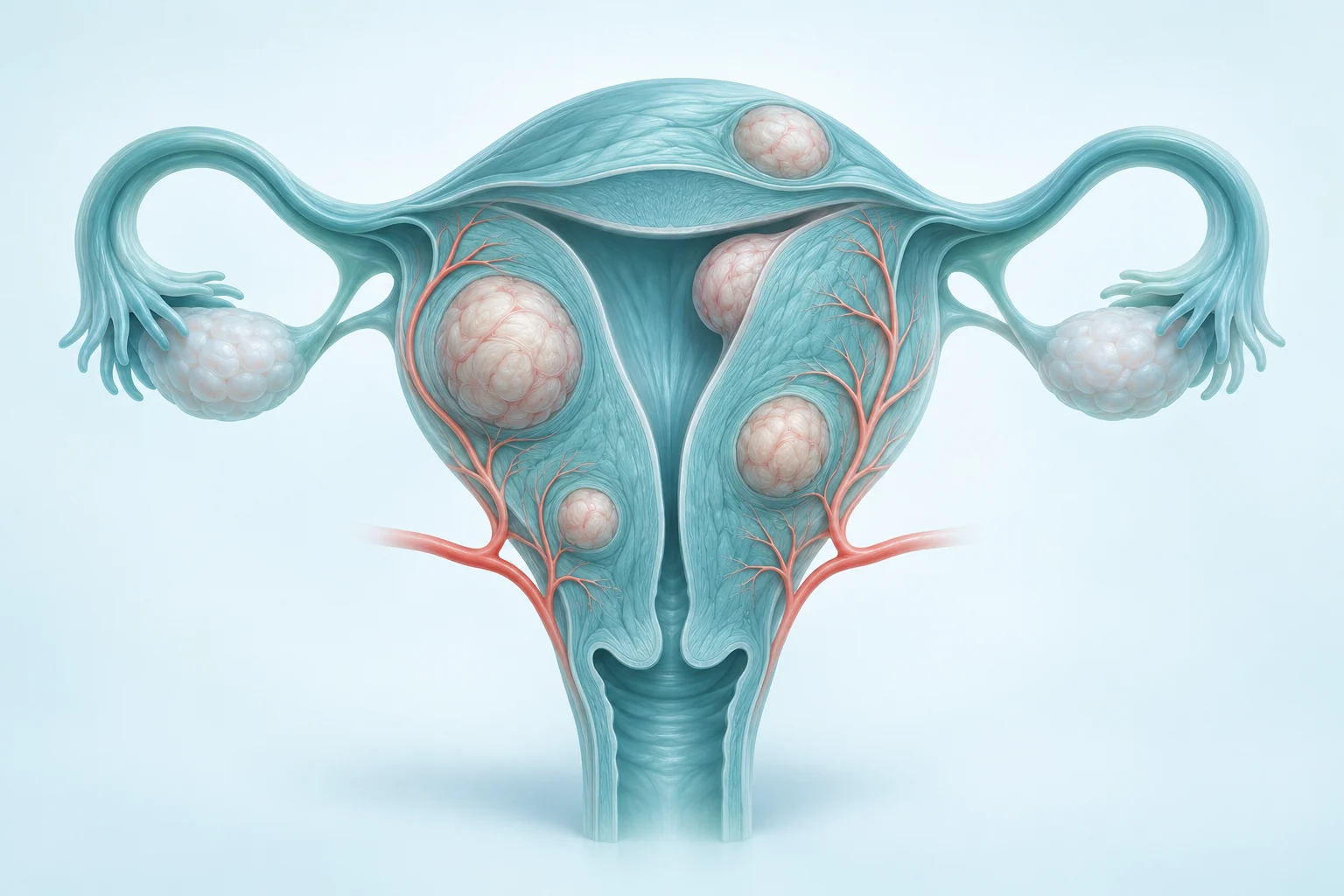
What is the difference between UFE and myomectomy? Uterine fibroid embolization (UFE), also called uterine artery embolization (UAE), reduces blood flow to fibroids so they can shrink. Myomectomy surgically removes fibroids while leaving the uterus in place. Both can improve symptoms, but recovery, repeat-treatment risk and reproductive considerations differ. Keeping the uterus does not guarantee preserved fertility with either approach.
The choice begins with your symptoms, imaging, anemia assessment and pregnancy plans. A consultation should also establish whether fibroids explain the symptoms and whether another diagnosis needs attention. UFE is offered by SoCal Interventional; myomectomy is performed by a gynecologic surgeon.
UFE vs myomectomy at a glance
| Question | UFE / UAE | Myomectomy |
|---|---|---|
| What happens to fibroids? | Blood flow is reduced; treated fibroids shrink over time. | Fibroids are removed surgically; the uterus remains. |
| How is it performed? | An arterial catheter procedure using imaging, contrast and embolic particles. | Through the cervix, small abdominal incisions or an open incision, depending on fibroid location, size and number. |
| Does it require an abdominal incision? | A small arterial access puncture is used. | Some routes involve abdominal incisions; hysteroscopic myomectomy does not. |
| How is recovery compared? | Often a shorter recovery than open abdominal surgery, with cramping and fatigue expected early. | Recovery differs substantially between hysteroscopic, laparoscopic/robotic and open approaches. |
| Is another treatment possible? | Yes. Persistent or recurring symptoms may require further treatment. | Yes. Remaining or new fibroids may later cause symptoms. |
| What if pregnancy is a priority? | Discuss uncertainty about reproductive outcomes with both gynecology and interventional radiology. | Often discussed when fibroid removal is needed for reproductive goals; suitability and risks depend on the individual case. |
These differences should be interpreted alongside your imaging, not used as a procedure-selection checklist. See ACOG's fibroid overview and ACR/RSNA's UFE patient guide.
What did the FEMME randomized trial find?
The FEMME trial randomized 254 women with symptomatic fibroids to UAE or myomectomy. Both groups experienced improved fibroid-related quality of life. Myomectomy had the larger average improvement at two years. At four years, the estimated difference still favored myomectomy but was not statistically significant, and missing follow-up data limited certainty.
Reported cumulative repeat-procedure rates at four years were 24% after UAE and 13% after myomectomy. Those are study results, not individualized predictions, and the estimate was imprecise. The trial supports discussing durability along with the initial recovery experience. FEMME trial report; four-year randomized follow-up.
A separate FEMME analysis found improvement in menstrual bleeding after both treatments. Pregnancy numbers were too small to determine reliably which treatment produces better reproductive outcomes. That uncertainty matters when counseling someone who hopes to become pregnant. FEMME bleeding and fertility analysis.
If you want a future pregnancy, make that the first discussion
Tell both the gynecologist and interventional radiologist whether you want to conceive now, later or are unsure. Fibroid location and its effect on the uterine cavity can matter, as can age and other fertility factors. Myomectomy may be considered when removal is appropriate, but surgery can also cause scarring and can affect advice about a future delivery. UFE's reproductive implications require specific counseling.
Do not choose a treatment solely because an advertisement calls it “uterus-sparing.” The ability to retain the uterus, the chance of conception and the risks during pregnancy are separate questions. Ask whether a fertility specialist should be involved before proceeding. ACOG: fibroids and treatment; FEMME reproductive-outcomes analysis.
Recovery: compare the actual procedures proposed
After UFE, pelvic cramping, fatigue and other post-embolization symptoms may occur, especially early in recovery. Many patients return to usual activities in approximately one to two weeks, but a patient's course and work restrictions can differ. Persistent or worsening symptoms should be discussed with the treatment team. ACR/RSNA recovery information.
“Myomectomy recovery” is not one fixed timeline. A hysteroscopic procedure through the cervix differs from laparoscopic or open abdominal surgery. Ask the surgeon which route is planned, why it fits your fibroids, and what it means for time off, lifting, pain control and pregnancy timing.
Risks worth discussing before either procedure
For UFE, ask about arterial-access bleeding, infection, contrast reactions, unintended embolization, ovarian effects, fibroid expulsion and the possibility of additional treatment, including surgery. For myomectomy, discuss bleeding, infection, scar formation, recurrence and the risks associated with the proposed surgical route. Individual health conditions can change the balance. Johns Hopkins: UAE risks; ACOG: surgical options.
Before treatment, ask who will answer urgent questions after hours and what symptoms require emergency care. Insurance authorization and a written cost estimate should be confirmed for the particular procedure and facility.
Bring these questions to your consultation
- Which fibroids appear responsible for my bleeding, pressure or other symptoms?
- Do I need anemia treatment, further gynecologic testing or updated imaging first?
- Which myomectomy route would be offered, and am I also a reasonable UFE candidate?
- How do my pregnancy plans affect the recommendation?
- What is the plan if symptoms persist or return?
Common questions
Does UFE remove fibroids?
UFE treats fibroids by reducing their blood supply so they can shrink. It does not surgically remove them. Myomectomy removes fibroids while preserving the uterus.
Is UFE better than myomectomy?
Neither is best for everyone. The FEMME trial, symptoms, imaging, recovery priorities and reproductive goals should inform a shared decision with the appropriate specialists.
Can fibroids come back after treatment?
Symptoms may persist or recur after either treatment, and further care can be necessary. After myomectomy, new or remaining fibroids may grow. Follow-up is important after UFE as well.
Can I get pregnant after UFE or myomectomy?
Pregnancy can occur after either procedure, but that does not establish equivalent fertility or pregnancy safety. Discuss your personal reproductive goals with gynecology and interventional radiology before choosing treatment.
Explore the rest of your options
Compare fibroid treatment options · UFE treatment and evaluation · UFE candidacy guide