Editorially updated July 20, 2026. Prepared by SoCal Interventional using the clinical sources listed below. This article is educational and does not establish PAE candidacy.
Prostate artery embolization (PAE) treats selected urinary symptoms attributed to benign prostatic hyperplasia by reducing blood flow to targeted prostate tissue. It is performed from inside the arteries, not through the urethra.
The procedure can improve symptoms for appropriately selected patients, but it does not cure every cause of urinary difficulty, remove the prostate, or guarantee that medication or surgery will never be needed.
Prostate artery embolization (PAE) is offered at our Fountain Valley office in Orange County as well as in Los Angeles and Tarzana.
Why reducing blood flow can affect BPH symptoms
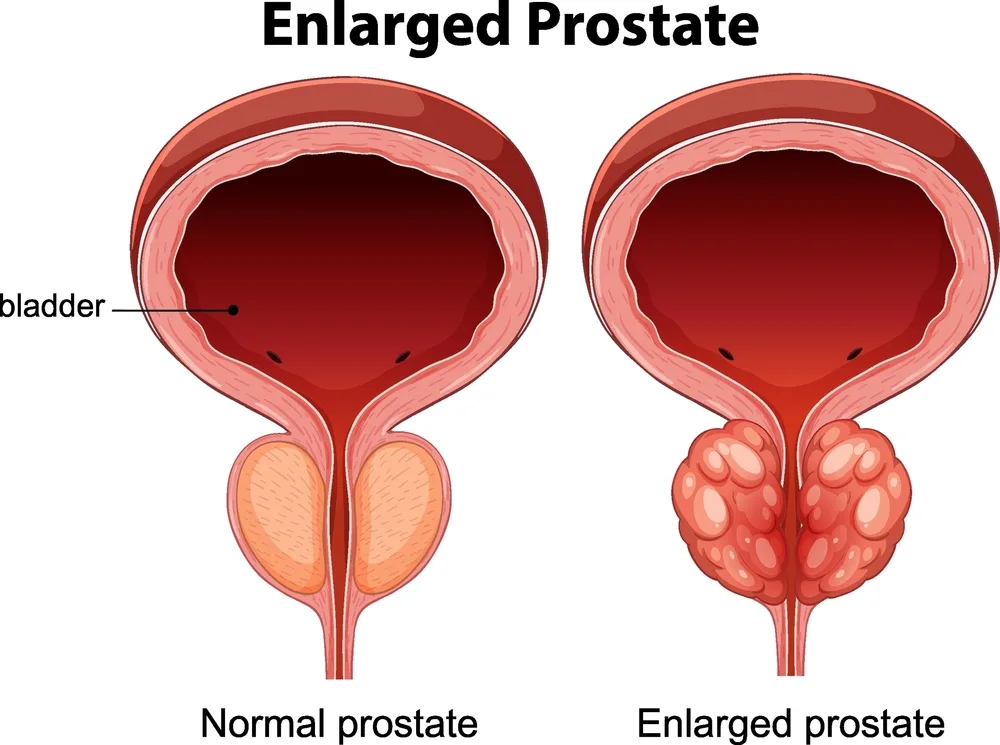
The enlarged prostate can compress or distort the urethra and contribute to bladder-outlet obstruction. During PAE, microscopic particles reduce circulation in selected prostate branches. The treated tissue may gradually shrink, which can reduce pressure around the urethra and improve lower urinary tract symptoms.
Response is gradual because tissue change takes time. The degree of prostate shrinkage does not perfectly predict symptom improvement, and bladder function remains important.
Step-by-step procedure overview
- Access: A small puncture is made in an artery, commonly at the wrist or groin.
- Navigation: Using fluoroscopy and contrast, the interventional radiologist advances a catheter into pelvic arteries.
- Mapping: Selective angiography identifies prostate branches and nearby vessels that should be protected.
- Embolization: Microscopic particles are delivered to targeted prostate arteries.
- Observation: The catheter is removed and the access site and urinary condition are monitored.
Arterial anatomy varies considerably. Atherosclerosis, small or tortuous vessels, and connections with bladder, rectal, or penile arteries can make the procedure more complex or occasionally prevent complete treatment.
What the clinical evidence means
A randomized sham-controlled clinical trial found greater symptom improvement after PAE than after a sham procedure in its selected study population. Other trials compare PAE with medication or surgery.
In a five-year randomized PAE-versus-TURP trial, both groups improved, but TURP produced greater improvement in several patient-reported and objective urinary outcomes. PAE can therefore be a meaningful option without being the most powerful option for every patient.
The multisociety position statement summarized by the Society of Interventional Radiology supports PAE for appropriately selected patients. The AUA BPH guideline also places treatment within shared decision-making and qualified clinician expertise.
Who may be evaluated
Evaluation may be reasonable for patients with bothersome symptoms attributed to BPH who have not obtained adequate relief from medication, cannot tolerate medication, prefer a procedural option, or have factors that make a less invasive arterial approach worth considering.
Candidacy also depends on prostate and arterial anatomy, kidney function, contrast allergy, vascular disease, infection, anticoagulants, bladder function, retention severity, prior treatment, and patient goals. Review the detailed PAE eligibility guide.
Potential risks
Risks can include access-site bruising or bleeding, temporary pelvic discomfort, burning or frequent urination, blood in urine or semen, acute urinary retention, infection, contrast reaction, kidney injury, radiation exposure, and rare non-target embolization with injury to nearby tissue.
Many patients retain erectile and ejaculatory function, but preservation is not guaranteed. A study specifically measuring ejaculation after PAE reported new dysfunction in a minority of participants and emphasized the need for additional data.
Recovery and expected timing
Many procedures are performed on an outpatient basis, but discharge and recovery depend on the patient and procedure. Temporary urinary irritation, pelvic discomfort, fatigue, constipation, or a symptom flare may occur. Improvement, when it occurs, is usually evaluated over weeks to months rather than on the day of treatment.
Patients should follow individualized instructions and promptly report inability to urinate, fever, heavy bleeding, worsening pain, access-site swelling, skin changes, or other concerning symptoms. See the PAE recovery timeline.
Sources
- AUA BPH guideline
- SIR: Multisociety PAE position statement
- Randomized sham-controlled PAE trial
- Five-year randomized PAE versus TURP trial
- Ejaculatory function after PAE
- SoCal Interventional medical editorial policy
To request an individualized PAE evaluation in Van Nuys, Tarzana, or Fountain Valley, call (310) 929-0026.
Medical content reviewed by Nathanael Sabbah, MD, interventional radiologist. Last reviewed: October 2026.
Would a consultation help clarify your options?
Bring your symptoms, prior treatment, imaging, and goals. We will discuss whether an image-guided procedure—or another path—fits your situation.
Request an appointment